McKinsey’s State of Fashion 2026: Tariff Turbulence
Report
Overview:
Tariffs aren't just a boardroom concern, they shape how consumers judge pricing, value, and brand trust. Shoppers expect prices to rise, but they aren’t happy about it. That means brands can’t rely on broad price increases; they must pull the levers that actually protect both trust AND profitability.
Tactical moves that distinguish resilient brands from reactive ones:
Simplify, simplify, simplify
Tariff turbulence amplifies the cost of complexity. This is where Pareto discipline becomes a competitive advantage revealing:
Where the brand’s identity truly lies
Where margin consistently leaks
Where operational complexity escalates
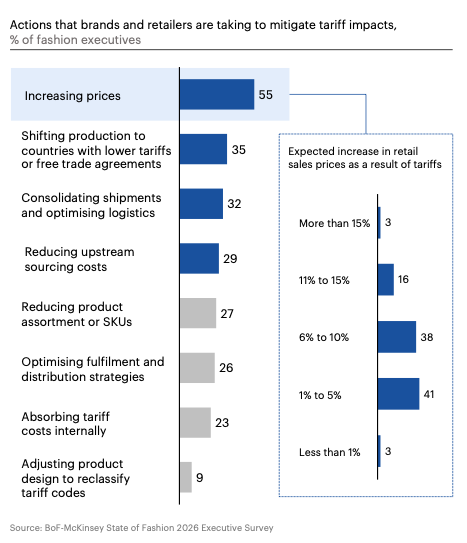
Levi's is a perfect example: they cut slower-moving SKUs before holiday to avoid margin-draining discounting later
Brands should establish a recurring “cut cycle” to proactively manage the SKU tail tied to production lead times and open-to-buy checkpoints
SKU reduction is not a cost-cutting tactic. It’s a way to free resources, accelerate innovation, and protect capital
Protect core pricing, optimize around newness
McKinsey notes that 55% of executives expect to raise prices in 2026, but the winners are doing it selectively and with intention
Core heroes: these are the products that build loyalty and determine “price memory” for the brand by holding prices steady
Innovation and newness: these products do the heavy lifting for higher price points and reacting to tariff pressures
Promotions must follow the same discipline. Deep, targeted markdowns clear liabilities and protect price integrity; shallow discounts on slow movers only drag issues into the next season
Diversify sourcing with intention and urgency
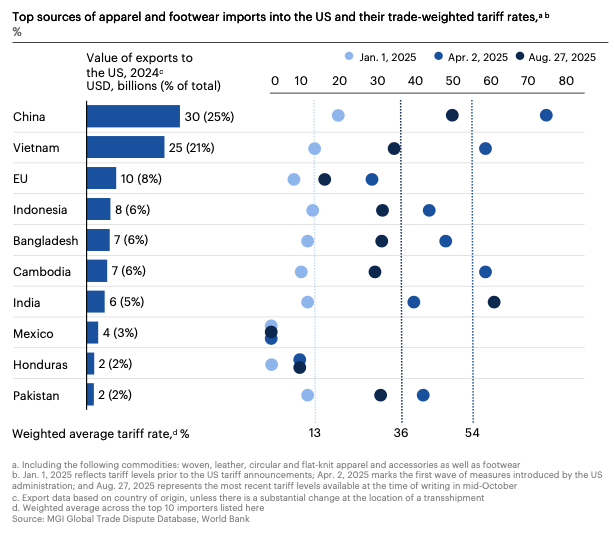
Sourcing diversification has moved from strategic initiative to fundamental resilience
Across both emerging and established brands, multi-country sourcing provides:
Pricing flexibility
Negotiation leverage
Protection from tariff-shocks
Improved inventory agility
If volumes support MOQs, diversification should be treated as a near-term requirement, not a long-term aspiration
Takeaway
Tariffs increase complexity, but they also sharpen priorities and can be a lesson for good-business practices.
The brands best positioned to navigate volatility are those that operate with discipline, reduce noise, and pursue pricing and sourcing strategies grounded in clarity rather than reaction.
Report: The State of Fashion 2026